
AI Recruitment: The 2026 Complete Guide to Everything You Need
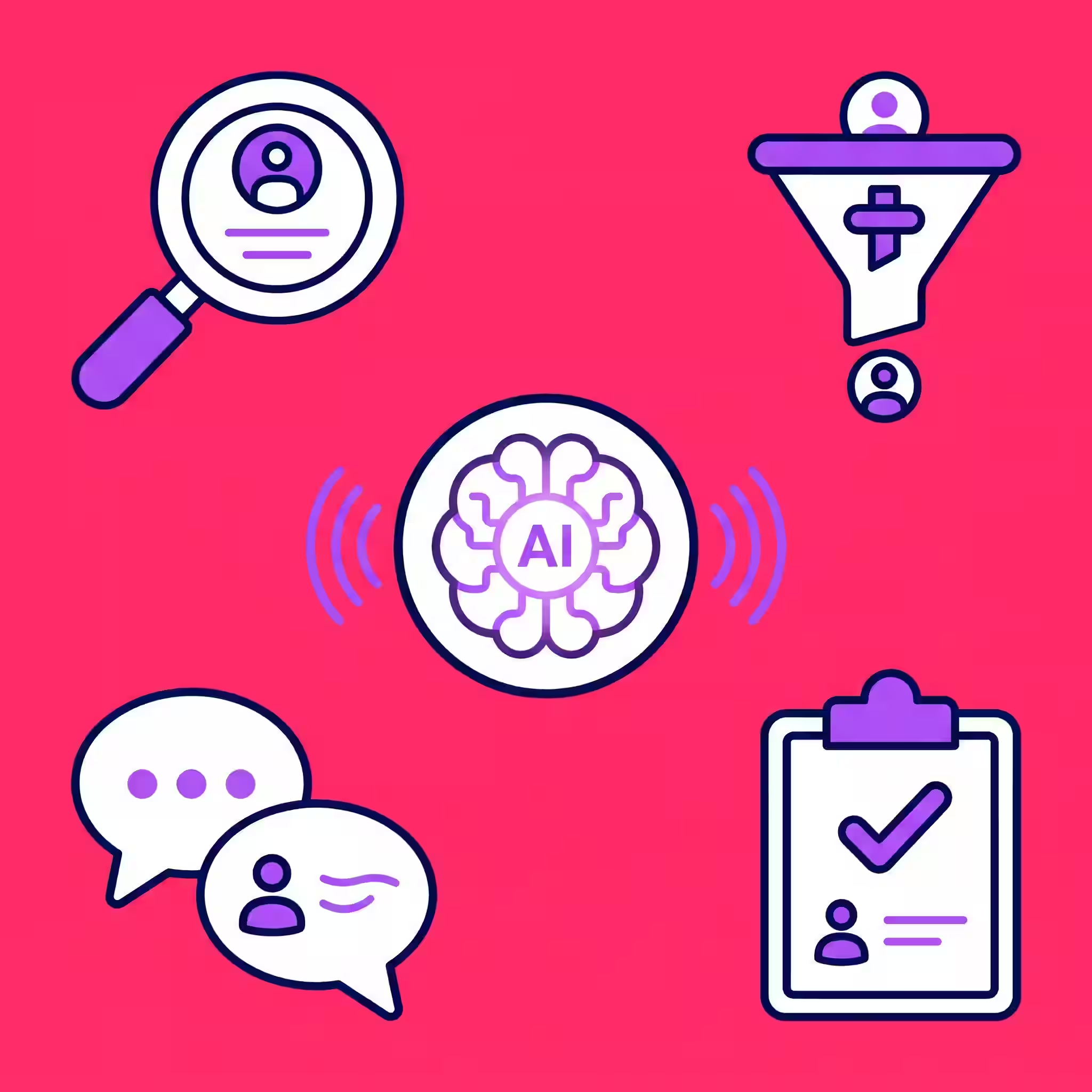
AI recruitment uses artificial intelligence to automate and enhance hiring—from sourcing and screening candidates to scheduling interviews and engaging applicants throughout the process. These tools leverage machine learning to surface data-driven insights, reduce manual work, and free recruiters to focus on relationships and decisions that actually require human judgment.
This guide covers how AI is transforming talent acquisition, the specific tools and applications available, best practices for implementation, and how to choose the right platform for your team.
What is AI recruitment
AI recruitment uses artificial intelligence to automate and improve hiring—from sourcing and screening candidates to scheduling interviews and keeping applicants engaged. These tools rely on machine learning to analyze data, spot patterns, and surface insights that would take humans hours (or days) to uncover manually.
The practical result? You spend less time on repetitive tasks like resume screening and more time on the work that actually requires a human touch: evaluating culture fit, building relationships, and closing offers. Platforms like GoPerfect use semantic search to understand the full context of what you're looking for, then surface relevant matches in seconds rather than hours.
Artificial intelligence vs machine learning in recruiting
You'll hear "AI" and "machine learning" tossed around interchangeably, but they're different things. AI is the umbrella term—technology that performs tasks requiring human-like reasoning. Machine learning is a type of AI that gets better over time by learning from data patterns.
For recruiting, this distinction matters because ML powers the features that make AI tools genuinely useful. Candidate matching improves as the system learns from your feedback. Predictive models get sharper at forecasting who's likely to respond. Personalization engines craft better outreach messages based on what's worked before.
TermWhat it meansHow it's used in recruitingArtificial intelligenceTechnology that performs tasks requiring human-like reasoningAutomating screening, scheduling, and candidate engagementMachine learningAI that improves by learning from data patternsRefining match quality, predicting candidate readiness, personalizing outreach
Benefits of AI in the recruitment process
Why are recruiting teams adopting AI so quickly? The answer comes down to measurable improvements across the metrics that matter most—according to SHRM, AI use across HR tasks climbed to 43% in 2026, up from 26% in 2024.
Faster time to hire and reduced manual work
AI handles the tasks that eat up your day—resume screening, interview scheduling, follow-up emails. Instead of spending hours on admin, you review a curated shortlist and focus on candidates worth your time. GoPerfect's autopilot feature, for example, reviews matches and adds top candidates to outreach automatically.
Higher quality candidate matches
Traditional keyword searches miss qualified people who describe their experience differently than your job posting. AI-powered semantic search interprets context, not just keywords. So you find candidates who actually fit—even when their resume doesn't use your exact terminology.
Improved candidate engagement and reply rates
Generic outreach gets ignored. AI tools analyze candidate backgrounds and craft personalized messages that reference specific career details. The result is higher response rates and more meaningful conversations from the first touchpoint.
Reduced bias and better diversity outcomes
AI can help identify patterns of unconscious bias in your hiring process. However, algorithms trained on biased historical data can also perpetuate discrimination—so regular auditing matters. When implemented carefully, AI screening focuses on skills and potential rather than demographic proxies.
Predictable outcome-based hiring
Rather than hoping your sourcing efforts pay off, you can set concrete goals like "5 interviews in 10 days" and let AI create a plan, track progress, and show exactly what to do next. This shifts recruiting from reactive to proactive.
How AI is transforming the hiring process
The shift isn't just about doing the same things faster. It's about changing how recruiting fundamentally works.
- From keyword matching to contextual understanding: AI interprets what you actually mean, not just the words you type
- From reactive sourcing to predictive targeting: Instead of waiting for applications, AI identifies candidates likely to make a move
- From generic outreach to hyper-personalization: Messages reference specific career achievements and goals
- From siloed work to team collaboration: AI surfaces warm paths through your colleagues' professional networks
AI recruitment tools and applications
What can these tools actually do on a daily basis? Here's a breakdown of the core capabilities.
AI sourcing and candidate discovery
AI scans resumes, LinkedIn profiles, and talent databases to find candidates matching your requirements. The best tools go beyond surface-level matching to understand skills, experience patterns, and career trajectories—surfacing people you'd never find through manual searches alone.
Predictive analytics for candidate readiness
Not every qualified candidate is ready to move. AI analyzes career patterns, company trajectories, and industry signals to predict who's likely open to new opportunities. This helps you prioritize outreach to people who are actually receptive rather than wasting time on passive candidates who won't respond.
Career trajectory and pattern analysis
Job titles and timelines only tell part of the story. AI evaluates growth patterns, impact indicators, and progression signals to assess how someone has developed professionally. You get a richer picture of potential fit than a resume alone provides.
AI-powered resume screening and matching
Automated parsing and ranking saves hours of manual review. AI scores candidates based on fit, flags potential concerns, and presents a prioritized list so you can focus attention where it matters most.
Automated personalized outreach
AI generates messages that reference candidates' specific backgrounds, achievements, and likely motivations. You can reach out via LinkedIn, email, or SMS—and customize tone, timing, and follow-up sequences to match your style. GoPerfect calls these "Smart Message Spices" because they add flavor to otherwise generic templates.
Generative AI and AI agents in recruiting
The technology keeps evolving. Here's what's emerging right now.
How generative AI creates recruiting content
Generative AI produces text—job descriptions, outreach messages, interview questions, candidate summaries. Instead of starting from scratch, you get a solid draft to refine. This speeds up content creation without sacrificing quality or your personal voice.
What AI agents do in talent acquisition
AI agents go beyond simple automation to complete multi-step tasks on their own. They might review your matches, move top candidates into outreach sequences, and schedule interviews—all while you focus on higher-value work. Think of them as intelligent assistants that handle entire workflows, not just individual tasks.
Challenges of AI-powered recruiting
AI isn't a magic solution. Understanding the limitations helps you implement it effectively.
Risk of replicating human biases
AI trained on historical hiring data can perpetuate existing biases. Recent lawsuits have highlighted concerns about fairness and transparency in algorithmic screening. University of Washington researchers found that LLMs favored white-associated names 85% of the time when ranking resumes.
Data quality and training requirements
AI recommendations are only as good as the data behind them. Poor-quality candidate information or insufficient training data leads to poor matches. The old saying applies: garbage in, garbage out.
Over-automation and candidate experience
Removing the human touch entirely can backfire. 68% of candidates prefer human interactions over AI/chatbots, especially for senior roles.
Privacy compliance and data security
Handling candidate data means complying with GDPR, CCPA, and other regulations. Look for platforms with enterprise-grade encryption and clear data handling policies before you commit.
Best practices for using AI in candidate screening
Here's how to get the most from AI screening tools.
1. Define clear hiring goals before you start
Set specific outcomes—roles to fill, timeline, interview targets—before deploying AI. This focuses the tool on measurable results rather than generic activity.
2. Combine AI recommendations with human judgment
AI surfaces candidates; humans make final selection decisions. Review suggestions, provide feedback, and use your expertise to evaluate culture fit and soft skills that algorithms can't fully assess.
3. Monitor for bias and audit regularly
Check whether certain groups are being filtered out unfairly. Periodic reviews of AI outputs help catch problems before they compound over time.
4. Integrate AI with your existing ATS and workflow
Seamless integration with ATS tools like Greenhouse, Lever, or Workday prevents data silos and extra manual work. Your AI platform and ATS work better together than separately.
5. Measure results and optimize continuously
Track time-to-hire, reply rates, and interview-to-offer ratios. Use data to refine AI settings and improve outcomes over time.
How to choose the right AI recruitment platform
Not all AI recruiting tools deliver the same results. Here's what to evaluate when comparing options.
Evaluate matching accuracy beyond keywords
Test how well the platform interprets nuanced job requirements. Semantic search and contextual understanding matter more than simple keyword filters.
Check integration with your current tools
Confirm compatibility with your ATS, CRM, and communication tools. Ask about both one-way and two-way data sync options.
Assess outreach automation and personalization
Review how the platform crafts and sends messages. Multi-channel options (LinkedIn, email, SMS) and customizable templates give you flexibility to match your brand voice.
Confirm security standards and compliance
Verify enterprise-grade encryption, GDPR/CCPA compliance, and data handling practices. Ask about audits and certifications.
Look for outcome-based hiring features
Prioritize platforms that let you set hiring goals and track progress—not just tools, but measurable results.
Will AI replace human recruiters
Short answer: no. AI handles repetitive tasks so you can focus on what humans do best—building relationships, assessing culture fit, and making nuanced judgment calls that algorithms can't replicate.
The recruiter role is evolving, not disappearing. You're becoming more strategic, spending less time on admin and more time on high-value activities that actually require human insight and emotional intelligence.
AI recruiting trends shaping the future
Here's where the market is heading:
- Agentic AI: Autonomous agents handling end-to-end recruiting workflows without constant human oversight
- Skills-based hiring: Emphasis on capabilities over credentials and pedigree
- Predictive talent intelligence: Forecasting candidate readiness and fit before you even reach out
- Hyper-personalization: Outreach tailored to individual career goals and motivations
- Team network leverage: AI surfacing warm introductions through employee connections
Build your AI-powered hiring engine
AI recruitment transforms how you source, screen, and engage candidates. The right AI recruitment platform combines speed, precision, and personalization while keeping you in control of the process and the candidate experience.
Whether you're filling tech roles, scaling a startup, or running an agency, AI can help you fill pipelines faster and focus your time where it matters most.
Ready to see AI recruitment in action? Book a Demo with GoPerfect and get to your perfect hire in seconds.
FAQs about AI recruitment
How much does AI recruitment software typically cost?
Pricing varies based on features, team size, and usage—from monthly subscriptions to enterprise contracts. Request demos from vendors to get quotes tailored to your hiring volume.
Can small businesses and startups use AI recruitment effectively?
Yes. Many platforms offer scalable plans suitable for smaller teams, including options with unlimited seats and simple interfaces that don't require dedicated HR staff to operate.
How long does it take to implement an AI recruiting platform?
Most modern platforms can be set up within days to a few weeks, depending on integrations required. Cloud-based tools typically offer faster onboarding than on-premise solutions.
What happens to candidate data collected by AI recruiting tools?
Reputable platforms store data securely with encryption and comply with privacy regulations like GDPR and CCPA. Always review a vendor's data handling policies before signing up.
How do you measure the ROI of AI recruitment?
Track metrics like time-to-hire, cost-per-hire, reply rates, and interviews booked compared to your baseline—companies using AI see an average 33% reduction in time-to-hire. Platforms with built-in analytics make it easier to demonstrate value to stakeholders.

Start hiring faster and smarter with AI-powered tools built for success


